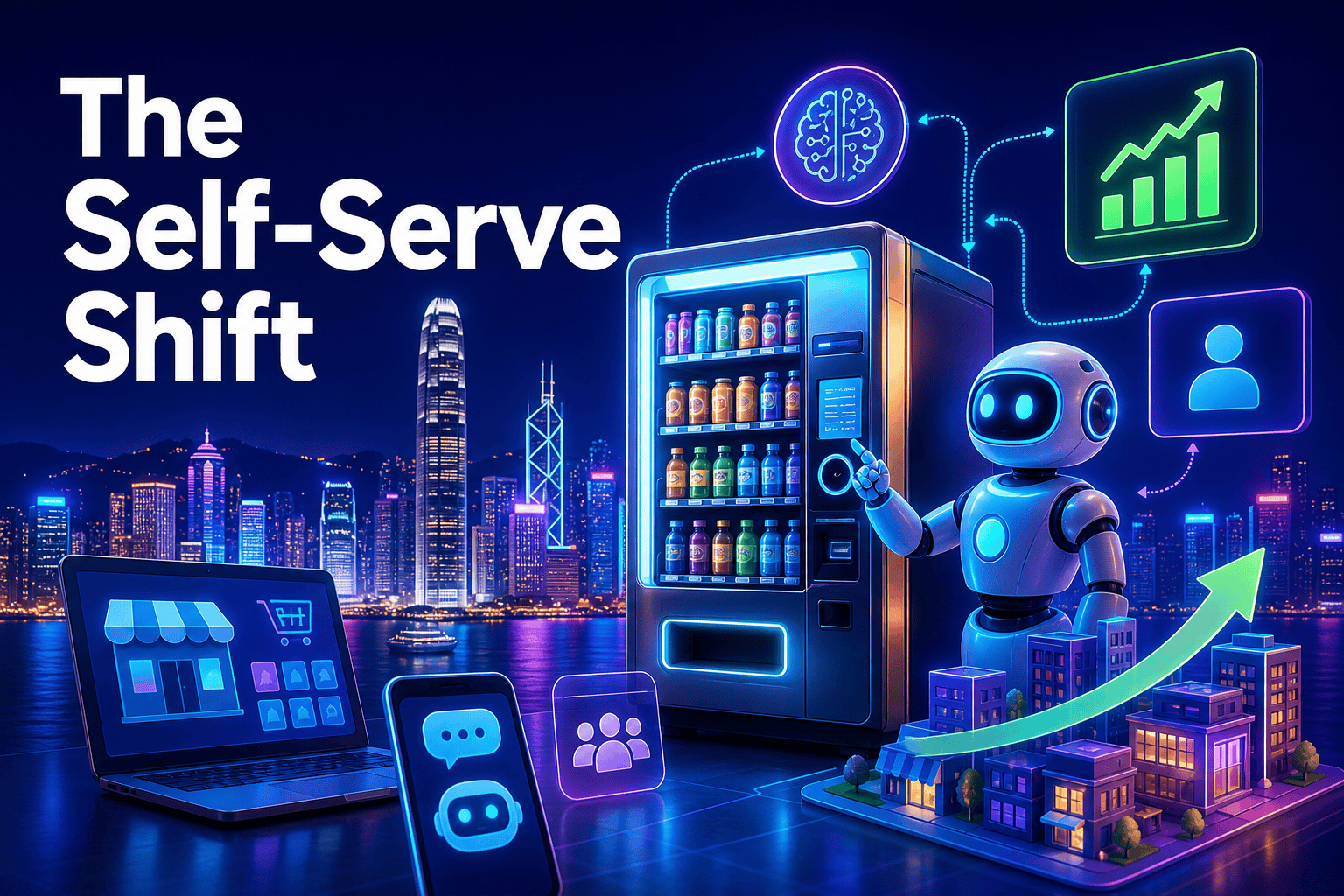
Hong Kong retailers are testing AI-powered open-door vending machines that use app-based access to automate sales. On the surface, that sounds like a niche retail story. In practice, it is a useful signal for any owner watching AI trends for small business: customers are becoming more comfortable with self-serve, AI-guided buying.
You do not need a vending business to learn from this. The bigger takeaway is that AI is moving closer to the customer, handling the first layer of questions, access, and transactions in a way that feels normal rather than experimental.
What happened in Hong Kong — and why it matters
According to the report, retailers in Hong Kong are exploring a new convenience model built around smart vending machines with AI and app-based entry. Instead of a classic staffed counter, the system shifts more of the purchase flow into software.
That matters because it shows automation is no longer just back-office. AI is being placed directly inside the buying experience, where customers discover, enter, choose, and complete simple actions with less staff involvement at the first step.
For small and mid-sized businesses, this is the same direction behind many ai agents for business. Whether the interaction starts at a vending machine door, a website, or a Telegram message, the goal is similar: remove friction for the customer and free up your team from routine repetition.
Why this story is bigger than vending machines
The interesting part is not the hardware. It is the operating model behind it. A customer is guided into a controlled, self-serve flow, while the business keeps the process consistent and available beyond the limits of a fully staffed setup.
That pattern applies far beyond retail. Service firms, e-commerce brands, clinics, consultants, and local businesses all have moments where people ask the same questions, need basic guidance, or hesitate before taking the next step. That is where ai automation for small business starts to become practical.
| Customer touchpoint | What the Hong Kong test suggests | Digital equivalent for an SMB |
|---|---|---|
| Entry into the buying flow | App-based access replaces a traditional first interaction | An ai chat widget for website that greets, qualifies, and guides visitors |
| Simple product or service questions | AI helps support a self-serve experience | AI customer support for FAQs, policies, and next steps |
| Availability outside staffed hours | The model is designed around convenience and automation | First-line support automation that keeps responding when your team is offline |
| Operational consistency | Software handles repeatable parts of the interaction | Standardized lead capture, routing, and follow-up rules |
This is why the news matters even if you never plan to sell through a machine. The real shift is that self-serve commerce is getting smarter, and customers are learning to trust it in everyday situations.
AI agent vs chatbot: the real shift business owners should watch
Many owners still hear stories like this and think, 'So, another chatbot.' But the more useful lens is ai agent vs chatbot. A basic chatbot answers prompts. An agent is part of the workflow: it follows rules, uses context, and helps move the customer from question to action.
In the vending example, AI is not there for small talk. It supports access and automated selling. On your website, the same idea might look like an assistant that explains your offer, filters low-fit requests, collects key details, and hands cleaner conversations to a human when needed.
The real story is not the vending machine itself. It is the broader shift toward AI handling the first, repeatable layer of customer interaction—wherever your business meets buyers.
That matters because many companies still delay automation until they think they need something huge. In reality, the first win is often much smaller: a better front door. When you add ai chatbot to website with a clear job to do, you create a structured first touchpoint instead of another unattended inbox.
What small businesses can copy right now
You do not need custom hardware, a retail chain, or a technical team to apply the lesson. Most businesses can start with a narrow, useful workflow and expand from there.
- Pick one repetitive customer journey. Start where customers ask the same things every week: pricing basics, eligibility, delivery areas, booking steps, or common objections.
- Give AI a clear front-desk role. An AI front desk can welcome visitors in your site chat widget or Telegram, answer routine questions, and guide people to the next action without pretending to do everything.
- Use your own materials. The more your assistant is grounded in your FAQs, policies, offers, and documents, the more useful it becomes for day-to-day conversations.
- Connect it to your workflow when you are ready. With mcp servers based on the Model Context Protocol, businesses can connect AI assistants like Claude and ChatGPT to business tools, so the assistant is not isolated from the systems your team already uses.
This is also where an ai agent platform can help. For example, botb2b.ai is an international platform with AI employees: an AI front desk for your website chat widget and Telegram, a free CRM with task boards, a catalog of AI models, and MCP servers that connect AI assistants to business tools — all without hiring a developer.
The important part is not to automate everything at once. Start with one flow, watch where customers get stuck, and refine the prompts, sources, and handoff rules. That approach is usually more useful than chasing a flashy demo.
What this means for your business
Hong Kong's smart vending experiment is a very visible reminder that AI is becoming part of the customer-facing layer of commerce, not just something for analytics teams or large enterprises. The businesses that benefit first are not necessarily the most technical ones. They are the ones that notice where customers wait, repeat themselves, or abandon the process.
If you want a practical next step, look at your first interaction point. That could be your site chat, support inbox, quote request flow, or Telegram entry point. A focused assistant can help with AI customer support, basic qualification, and consistent answers while your team spends more time on complex work.
In other words, the Hong Kong story is not really about vending machines. It is about the normalization of a digital workforce that handles simple, repeatable customer moments. For small business owners, that is the trend worth paying attention to now.