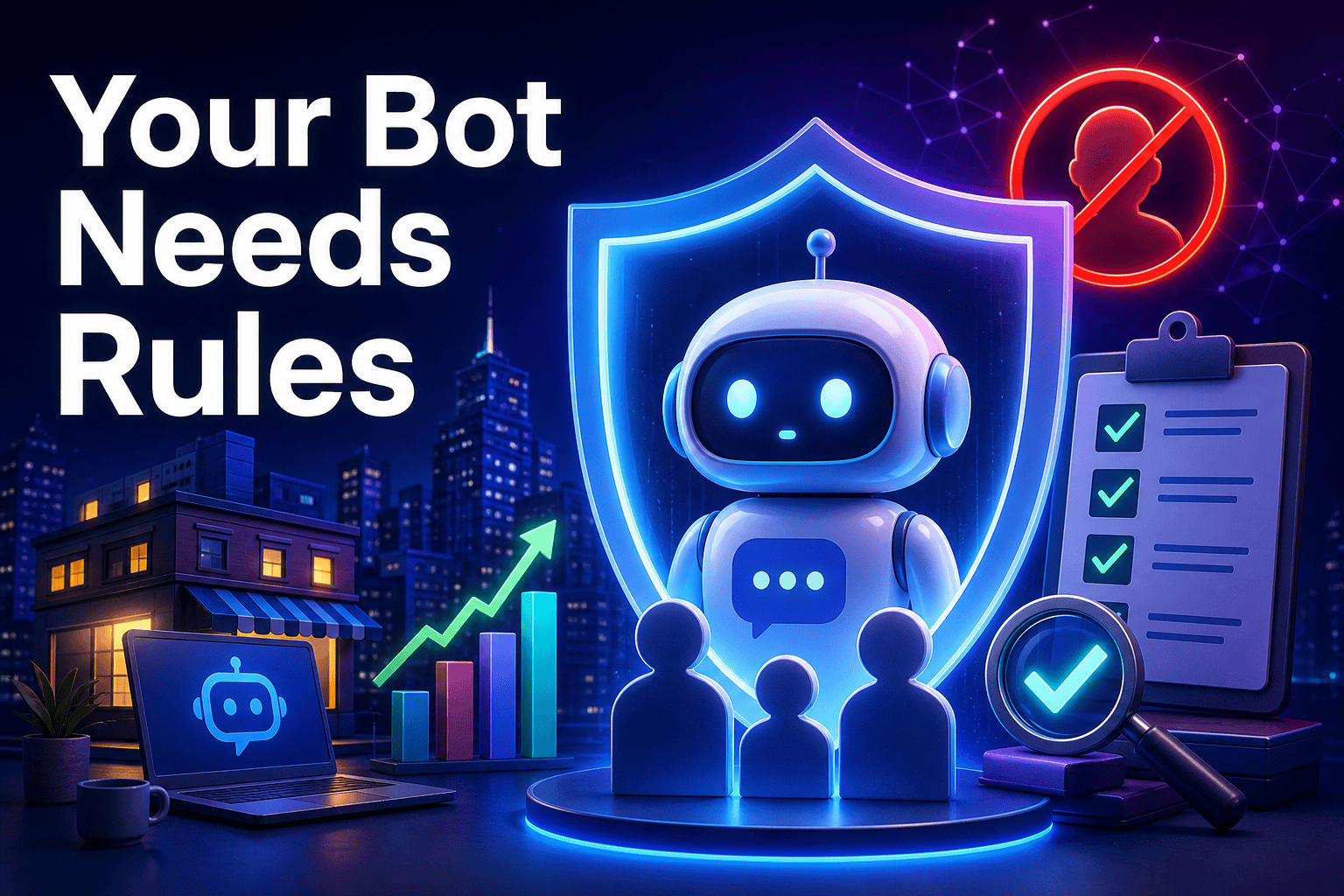
New York has passed new rules limiting harmful AI chatbot interactions with minors. The law targets behavior such as simulated romantic relationships, encouragement of emotional dependency, and content that promotes self-harm.
For small and medium businesses, this is more than a local headline. If you use AI in customer conversations, the question is no longer just whether the bot works. It is whether the bot stays inside safe, clear boundaries when real people use it.
What happened in New York
Governor Kathy Hochul signed two laws on October 28. One bars AI chatbots from harmful interactions with minors, including simulated romantic relationships, encouragement of emotional dependency, and promotion of self-harm. Another requires internet-connected baby monitors to include safeguards against unauthorized access to audio and video feeds.
The immediate story is child safety. The broader story is that regulators are looking beyond privacy policies and asking how AI behaves in practice. That puts product design and compliance at the center of any customer-facing AI rollout.
That shift matters because many companies still treat conversational AI as a lightweight feature. New York’s move suggests lawmakers increasingly see it as a product experience with real duty-of-care questions attached.
Why even non-kids businesses should care
If you run e-commerce, healthcare admin, education, travel, home services, or any consumer-facing site, minors may still reach your bot even if children are not your target audience. A public chatbot does not always know who is on the other side of the screen.
That matters because many SMBs use ai customer support or a website chatbot for business for FAQs, lead capture, appointment requests, and after-hours replies. The New York law is a reminder that conversational AI is not just content on a page; it is an active interface that can create risk through tone, suggestions, and relationship-style messaging.
- Customers increasingly expect safer defaults from AI tools.
- Partners and larger buyers may start asking what guardrails you have in place.
- Your team needs clear rules for when AI should stop and a human should take over.
Even if your business never markets to children, this is the kind of policy signal that shapes expectations across the wider English-speaking market. Public-facing AI is moving from novelty to accountability.
AI agent vs chatbot: safety is now part of the product
The old comparison in ai agent vs chatbot discussions was usually about intelligence: can the tool follow context, search documents, or complete a task. After this news, there is another test: can it stay in role and refuse the wrong kind of conversation?
The winning AI assistant for business will not be the one that says the most. It will be the one that knows what not to say, when to stop, and when to hand over.
That matters even more if you train chatbot on your own data or use a system that answers from internal documents. A bot that knows more can also say more, so your business needs boundaries around sensitive topics, emotional language, personal advice, and unsupported claims.
In practical terms, a strong customer bot should act like a focused service tool, not a digital companion. It can answer policy questions, explain product details, and collect the next step. It should not drift into intimacy, dependency, or high-risk advice outside its role.
A practical review checklist for SMBs
Here is a simple framework for reviewing any public-facing AI, especially an ai knowledge base chatbot connected to business systems through mcp servers.
| Area | Why it matters now | What to review |
|---|---|---|
| Audience access | Your bot may be reachable by minors even if they are not your target users. | Check website pages, help centers, and Telegram entry points where the bot appears. |
| Conversation guardrails | Unsafe behavior often comes from tone and suggestions, not only factual errors. | Define forbidden topics and behaviors, including romance simulation, dependency cues, and self-harm related responses. |
| Knowledge source | Bots become riskier when they improvise beyond approved business information. | Limit answers to reviewed policies, product docs, and support content. |
| Escalation | Some conversations should never stay inside automation. | Create handoff rules for distress, complaints, sensitive personal issues, and unclear requests. |
| Tool connections | More capable assistants can trigger bigger mistakes if permissions are too broad. | Review what the bot can read, write, or update across your CRM and internal tools. |
A useful internal checklist can be very short:
- Write down what the bot is allowed to do and what it must refuse.
- Test edge cases, not just normal sales and support questions.
- Review conversation logs for tone drift, risky prompts, and repeated failure patterns.
- Make sure staff know who owns updates, approvals, and escalation paths.
If you use an AI agent platform such as botb2b.ai, these checks should apply to the whole setup: the AI front desk in your website chat widget or Telegram, the free CRM with task boards where follow-ups land, and any model connections or MCP servers that link assistants like Claude and ChatGPT to business tools without hiring a developer. More capability is helpful, but it makes clear rules even more important.
What this means for your business
New York’s law is local, but the signal is broad: public-facing AI needs safer defaults, better boundaries, and more deliberate oversight. For companies exploring ai agents for business, safety is no longer a separate legal box to tick later; it is part of the product decision from day one.
If you are investing in ai automation for small business, look for tools that let you control instructions, approved knowledge sources, escalation paths, and permissions. The best setup is often narrower than founders first imagine: a bot that answers accurately, stays in role, and passes sensitive cases to a person.
You do not need to panic or stop using AI. But you do need to treat your bot like a real business process, with rules, reviews, and ownership. That is how AI employees become genuinely useful instead of becoming the next avoidable risk.