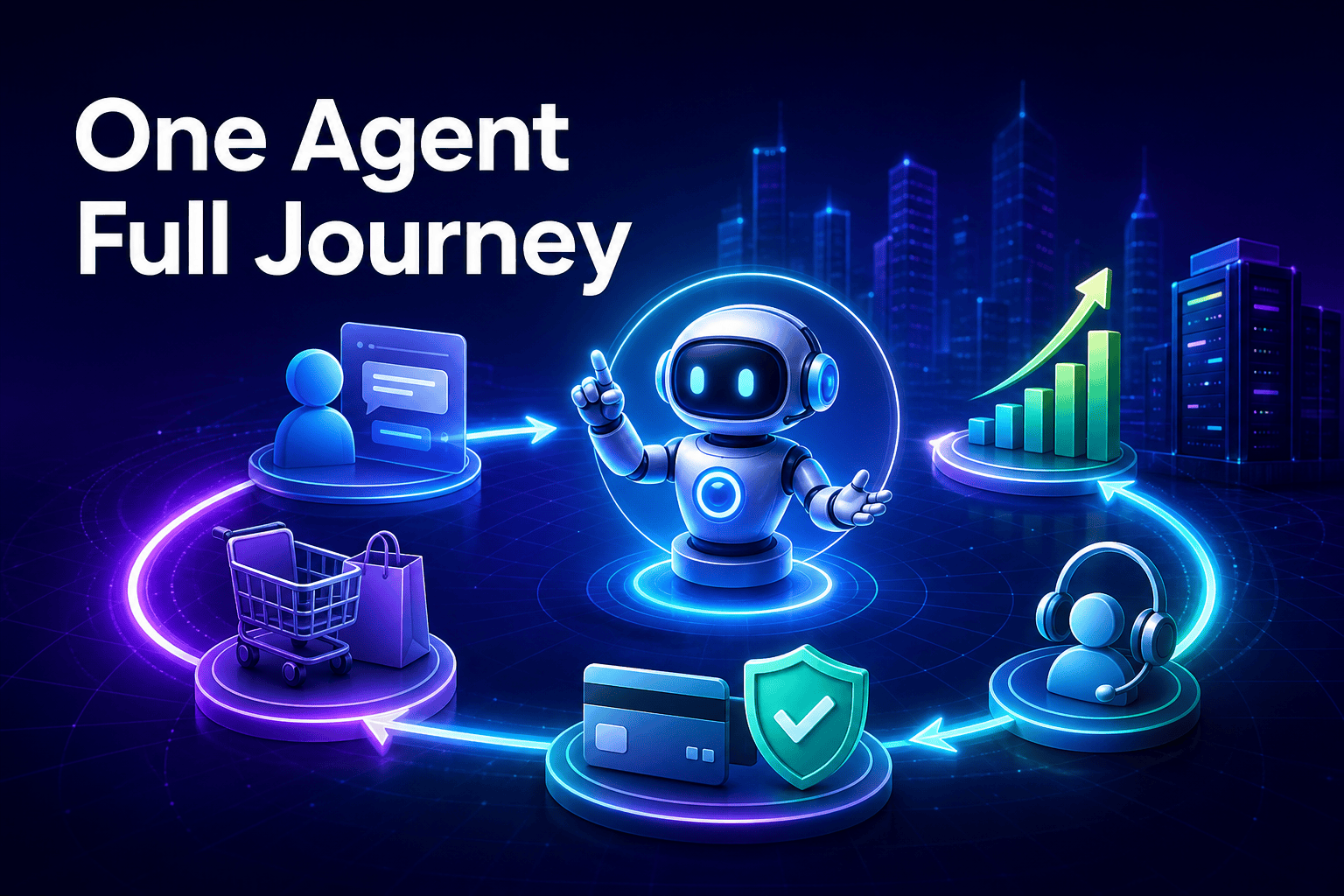
Sendbird has launched Delight Customer Agent and Midas under its delight.ai brand. The news matters because it points to the next stage of AI: not separate tools for marketing, sales, and support, but one system that keeps context from first question to repurchase.
For owners and operators, this is less about one vendor announcement and more about a clear market direction. Customers do not want to explain themselves three times, and teams do not want every policy change to wait on developers.
What Sendbird just launched
According to the announcement, Sendbird introduced Delight Customer Agent to connect shopping, reservations, customer support, and retention in one customer journey. The idea is simple: a customer can browse, buy, ask for help after purchase, and later renew or buy again inside a single flow.
The company also launched Midas, a management tool for AI agents. Its purpose is to let business teams update workflows and operational policies in natural language, test them with virtual customers, and improve them without routing every change through engineering.
The source also says these tasks can follow company-set policies, permissions, and approval procedures. That matters because most businesses do not just want fast answers; they want automation that stays inside the rules.
Put together, this is not being presented as just another chatbot. It is positioned as an operational layer that carries customer context from one stage of the relationship to the next.
Why this matters for AI customer support
Many companies already use AI in separate pockets: product recommendations on one side, lead handling on another, and support somewhere else. The problem is that AI customer support feels broken when those systems cannot share the same history, rules, and customer intent.
An ai chatbot for customer service can answer FAQs, but it stops being useful when it forgets what happened before the order was placed. Sendbird's pitch is that the agent remembers preferences, past purchases, and previous conversations, then uses that context later for order changes, exchanges, refunds, renewals, and retention offers.
This is also why the line between support and an AI sales agent is getting thinner. If the same system can recommend products, qualify interest, schedule consultations, and handle post-purchase questions, the business is no longer automating isolated tasks; it is managing an ongoing customer relationship.
The real shift is not from human support to bot support. It is from disconnected automation to one AI system that keeps the customer story intact from first question to repeat purchase.
From isolated bots to connected AI agents
The most useful part of the announcement may be the market signal behind it. Sendbird cited Salesforce survey data saying 50% of enterprise AI agents operate independently, while only 27% of applications are interconnected inside the business.
That gap explains why many automation projects feel underwhelming. You can automate one step very well, but if handoffs break, customers still repeat themselves and staff still need to clean up the process.
| Signal from the news | Detail | Why it matters |
|---|---|---|
| Independent AI agents | 50% | Many businesses still automate tasks without shared context. |
| Interconnected applications | 27% | Fragmented tools create broken handoffs and repeated explanations. |
| Journey covered by Delight Customer Agent | Shopping, reservations, support, retention | The market is moving from single-purpose bots to end-to-end customer flows. |
Midas is the other important piece because it speaks to ai agents without coding. Business teams often know what should change first: refund rules, escalation steps, renewal offers, approval paths, or knowledge base content.
When those changes can be written in natural language, tested, and updated quickly, the agent becomes easier to operate as the business changes. That is especially relevant for teams that need faster first line support automation but do not want every small adjustment to become a development project.
How smaller teams can apply the same idea
Most small and mid-sized companies do not need to copy an enterprise architecture. The practical lesson is to start with one journey that already creates friction: pre-sales questions on your site, order-status questions after purchase, or renewals for existing customers.
From there, choose a platform that can keep context, use your documents, and connect to the tools your team already uses. That is where ai automation for small business becomes useful: not by adding more disconnected bots, but by making one assistant responsible for a clear slice of work.
A lightweight example is botb2b.ai. It offers an AI front desk for your website chat widget and Telegram, a free CRM with task boards, a catalog of AI models, and MCP servers for linking Claude or ChatGPT with business tools without hiring a developer. For many teams, that is a more practical starting point than building custom systems from scratch.
What this means for your business
Sendbird's launch is a reminder that the next wave of AI agents for business will be judged less by how clever they sound and more by how well they preserve context across the customer journey. Owners should pay attention to that now, before adding yet another standalone bot to the stack.
If you are evaluating new tools, ask a few plain questions:
- Can the agent use the same customer context before and after a purchase?
- Can non-technical staff update policies, content, and workflows quickly?
- Can it follow approvals and business rules rather than improvising around them?
- Can it connect to the systems that already hold your customer and order data?
You do not need to automate everything at once. Start with one path, make it consistent, then expand. That is how AI customer support turns from a nice demo into a reliable part of daily operations.