Prembly has released a server that connects artificial intelligence assistants to identity verification and compliance software using the Model Context Protocol. In plain English, that means a team can ask an AI interface to run checks or trigger actions from compliance systems without building a custom integration from scratch.
On the surface, this looks like a cybersecurity or enterprise software update. In reality, it is a useful example of where AI agents for business are heading: away from chat-only demos and toward tools that can work inside real company processes.
What Prembly launched: an MCP server for business
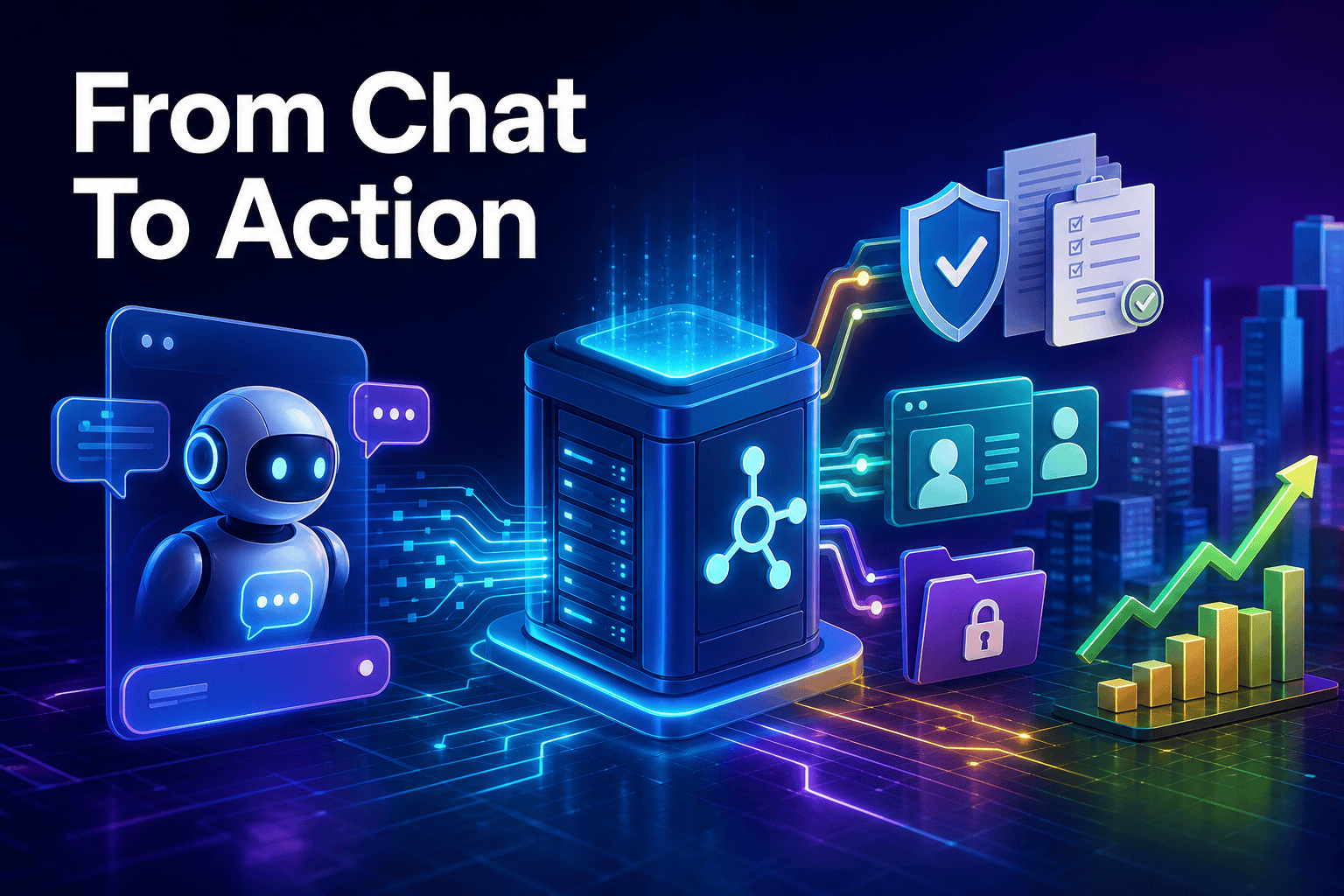
According to Portal ERP, Prembly's new server acts as an intermediary layer between an AI chat interface and Prembly's core systems. It receives a request from an assistant, then executes standard REST calls to the company's identity verification and fraud prevention software using client authentication keys.
The practical outcome is straightforward. Teams can use natural language prompts to trigger tasks such as know-your-customer checks, anti-money laundering screening, politically exposed person checks, and some account management functions.
That is why this is more than a feature release. It is a live example of how MCP servers can connect ChatGPT to business tools so operational work moves faster than the old pattern of reading documentation, writing custom code, and then handing the workflow to non-technical staff.
Why this matters for AI agents without coding
Many business owners have already seen what a chatbot can do when it answers questions from a knowledge base. The next step is different: an assistant does not just explain a process, it can request an approved action from another system.
This is where the model context protocol matters. It gives AI tools and business software a shared way to pass context, available actions, and structured requests, which is why the idea of AI agents without coding is becoming more realistic for small and mid-sized teams.
Prembly's launch also highlights an important shift in product design. Before this kind of setup, compliance automation often depended on developers building one-off flows; now the goal is to let operations teams access the workflow through plain-language interfaces.
The big change is simple: an AI assistant becomes far more useful when it can securely do work inside your business tools, not just talk about the work.
From chatbot to workflow: where the pattern is useful
Not every SMB needs AML or politically exposed person screening. But many do need the same basic pattern: ask a question in chat, check something in an approved system, and move the task forward without opening five different tabs.
That is why this matters beyond compliance. A website chatbot for business becomes much more valuable when it can interact with the systems behind onboarding, operations, and support, rather than stopping at a text reply.
| Workflow step | Traditional setup | With an MCP-connected agent |
|---|---|---|
| KYC checks | Manual handoff or custom-built integration | A team member asks the assistant to trigger the check in natural language |
| AML and PEP screening | Separate login, separate search, separate review flow | The assistant passes the request to the compliance tool through the server layer |
| Account management tasks | Staff switch between chat, documentation, and backend tools | The assistant helps route the request through the approved system |
| Team access to workflows | Technical teams build first, operations use later | Operations teams can reach the workflow earlier through chat interfaces |
For small companies, the lesson is not that every process needs an agent. The lesson is that AI automation for small business becomes more practical when the connection layer is already in place, because that is what turns a chat tool into something closer to an AI employee for business.
Security and deployment are part of the story
One detail in the news is especially important: organizations can configure deployment with zero data retention parameters in enterprise systems, or run through locally hosted models. For any company handling identity data, compliance records, or sensitive documents, that is not a side note.
Too many AI discussions focus only on the model itself. In practice, the bigger questions are where data goes, what gets stored, who controls the keys, and whether the workflow fits internal privacy policy.
So if you are evaluating an MCP server for business, look beyond the demo. The useful question is whether the setup gives your team a secure and manageable way to use AI inside a real workflow, not just a clever interface.
What this means for your business
Prembly's release is a good example of the next stage of business AI. The winning products will not be the ones that only answer nicely; they will be the ones that can act inside approved systems while keeping control, privacy, and accountability in place.
If you run a small or mid-sized company, there are four practical takeaways:
- Start with one workflow that already creates friction, such as onboarding, compliance checks, internal approvals, or account updates.
- Ask about the connection layer, not just the chatbot. The real value often comes from how the assistant reaches your business tools.
- Review data handling early. Zero retention options, local models, and clear permissions matter more once the assistant can take action.
- Prefer tools your operations team can use without waiting on a custom development cycle.
This is also why platforms such as botb2b.ai are leaning into this direction. The platform combines an AI front desk for your website chat widget and Telegram, a free CRM with task boards, a catalog of AI models, and MCP servers that connect assistants like Claude and ChatGPT to business tools without hiring a developer.
The broader message is simple. AI in business is moving from content generation to connected execution, and the companies that benefit first are often the ones that choose a narrow, useful workflow and give their team a safe way to use it every day.