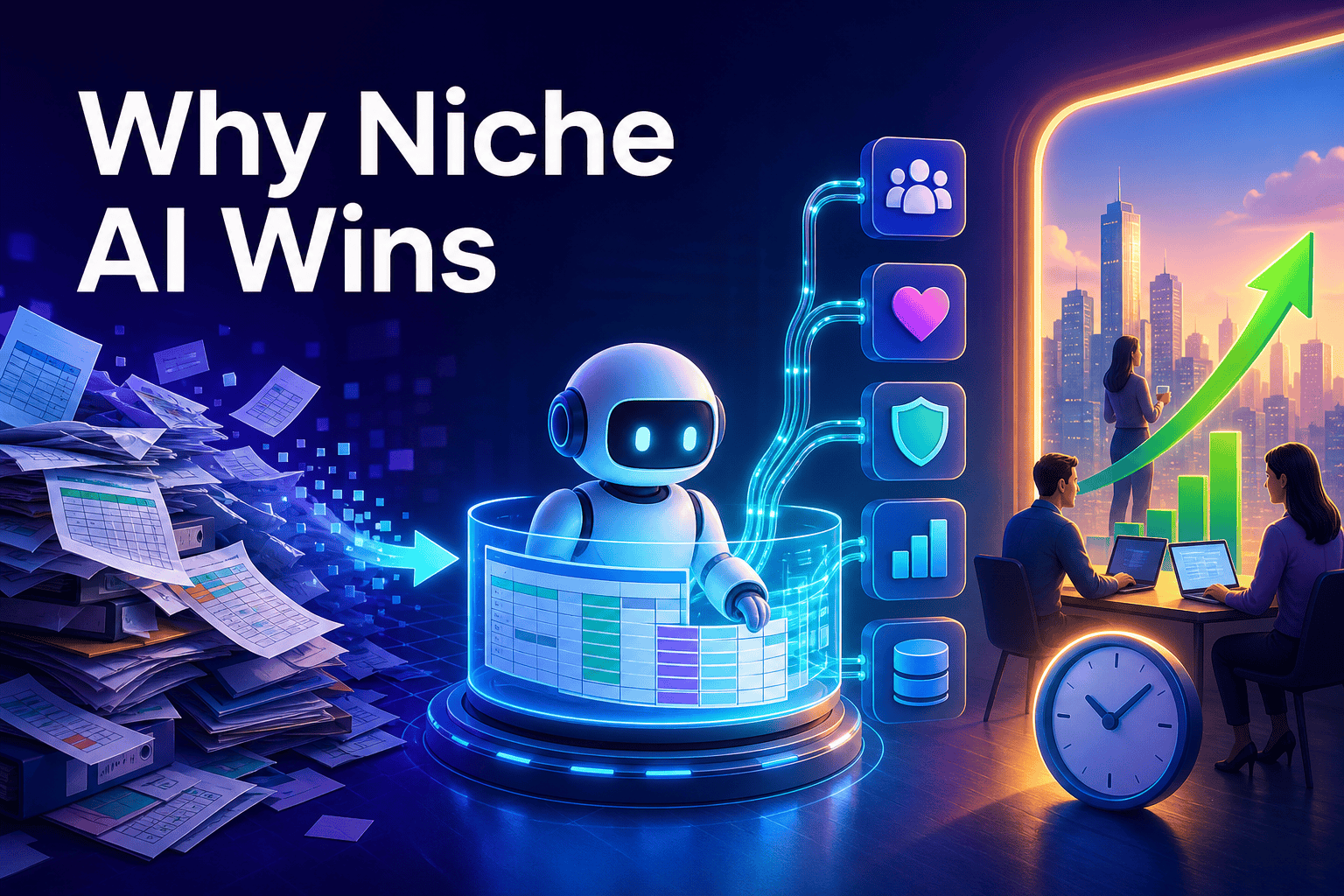
Avante, a Seattle startup, is getting attention for a very specific kind of automation: employee-benefits spreadsheets. The company says large employers such as Samsung Semiconductor and Goldman Sachs use its platform to pull together HR, carrier, and benefits data, then hand repetitive analysis work to AI agents.
That may sound like a niche HR story. It is — and that is exactly why it matters. The bigger signal for owners and operators is that AI agents for business are becoming valuable when they target one expensive workflow, connect to real systems, and help humans make decisions faster.
What Avante proves about AI agents for business
Avante is not trying to be a general assistant for everything. It is going after a focused enterprise workflow: the messy, ongoing work of comparing vendor contracts, claims, plan documents, and utilization reports inside self-funded health programs. That is a smart wedge because the work is repetitive, data-heavy, and important enough that errors or delays can become expensive.
The company also separates the product into two roles. One agent, Carly, helps employees understand coverage and claims. Another, Ava, is aimed at benefits leaders who need analyst-grade answers on cost, utilization, and outcomes. In practice, this is a good example of how ai agent vs chatbot thinking is changing: the useful product is not one generic chat box, but purpose-built agents with different jobs and data access.
| Signal | Detail from the news | Why it matters |
|---|---|---|
| Funding | $40M disclosed in total, including a $30M Series A | Investors see demand for narrow, operational AI |
| Cited users | Samsung Semiconductor, Goldman Sachs, News Corp, Zscaler | Brand-name buyers help validate the workflow pain |
| Coverage | More than 385,000 employees and family members, according to the company | Shows the platform is aimed at complex, scaled operations |
| Agent design | Carly for employees, Ava for benefits leaders | Different users need different answers and permissions |
| Target customer | Mid-to-large employers with self-funded benefits programs | A clear ideal customer profile sharpens product and sales |
If you run a smaller company, do not get stuck on the benefits angle. The lesson is not that you need healthcare-plan software. The lesson is that the best AI tools often start with one ugly spreadsheet, one bottleneck, and one team that is tired of cleaning data by hand.
Why this is bigger than an HR software story
Avante’s niche matters because it reflects a broader shift in ai automation for small business and enterprise software alike. The winning products are increasingly built around a narrow operational problem rather than a broad promise of intelligence. Buyers want less magic and more useful output: cleaner data, faster reporting, fewer routine questions, and better visibility.
There are three reasons this approach keeps showing up:
- High-friction workflows are easier to justify than open-ended experimentation.
- Teams adopt AI faster when the job is clear and the handoff to humans is obvious.
- Vendors sell more effectively when they can point to a specific line item of wasted time, consulting spend, or operational delay.
The main insight is simple: AI creates real business value when it takes over a messy, repeatable workflow tied to live company data — not when it is added as a generic chat layer with no system access.
This is why so many founders now talk about ai employees. The phrase only makes sense when the software can actually do a bounded job, keep context, and return work in a format the team can trust. Otherwise, it is still just a chatbot with better branding.
The hard part is integration, not intelligence
The most important detail in the Avante story is not the interface. It is the data plumbing. The platform reportedly pulls information from HRIS, benefits administration, and carrier systems, and that connection is what makes the agents useful. Without those links, the experience would be much closer to a static FAQ than a working business tool built on connected data.
This is the part many companies underestimate when shopping for AI automation. Your real question is not only whether the agent sounds smart. It is whether it can read the right records, understand document context, and surface the answer inside the workflow where your team already works.
There is also a change-management layer. In Avante’s case, benefits leaders must trust the analysis, while employees must choose the employee-facing agent instead of going straight to HR. In your business, the same pattern shows up in support, sales ops, finance, or reporting. Adoption depends on reliability, permissions, and good handoffs — not just good demos.
Where MCP fits for smaller firms
For smaller companies, emerging mcp servers matter because they point to a simpler way to connect assistants with the tools you already use. In plain English, this means giving an assistant real business context instead of isolated prompts. You still need clear rules and clean data, but the direction of travel is obvious: connected agents beat disconnected chat.
How to apply this playbook in a smaller company
You do not need enterprise scale to copy the logic behind Avante. If you are evaluating an ai agent for small business, start with the most annoying recurring task that pulls information from multiple places. That might be lead follow-up, ticket triage, order-status questions, internal reporting, or reconciling supplier updates.
- Pick one workflow that repeats every week and already has a human owner.
- List the systems and documents the agent would need, from your CRM to spreadsheets to policy docs.
- Define the output before you define the AI: a summary, a draft reply, a routed task, a report, or a flagged exception.
- Measure adoption by asking whether the team actually uses it, not whether the demo looked impressive.
This is also why ai agents without coding are becoming appealing. Small teams often do not need a custom build first; they need a way to connect data, test one narrow job, and refine it as the team learns where the real friction is.
What this means for your business
Avante’s news is a reminder that the next wave of AI will be less about flashy assistants and more about useful, connected workflows. The winners are not necessarily the companies with the broadest AI story. They are the ones that identify one painful process, wire the agent into the right systems, and make the output trustworthy enough for everyday use.
For many small and midsize businesses, that means thinking less about replacing people and more about freeing up time. A well-scoped ai employee for business can take first-pass questions, organize information, create follow-up tasks, or prepare reports so your team can spend more time on decisions and customer work.
If you want to test that model without a heavy development project, platforms such as botb2b.ai package a practical starting point: an AI front desk for your website chat widget and Telegram, a free CRM with task boards, a catalog of AI models, and MCP servers that connect assistants to business tools — all without hiring a developer. Whether you use that route or another one, the takeaway from Avante is the same: start narrow, connect the data, and build from a real business workflow outward.