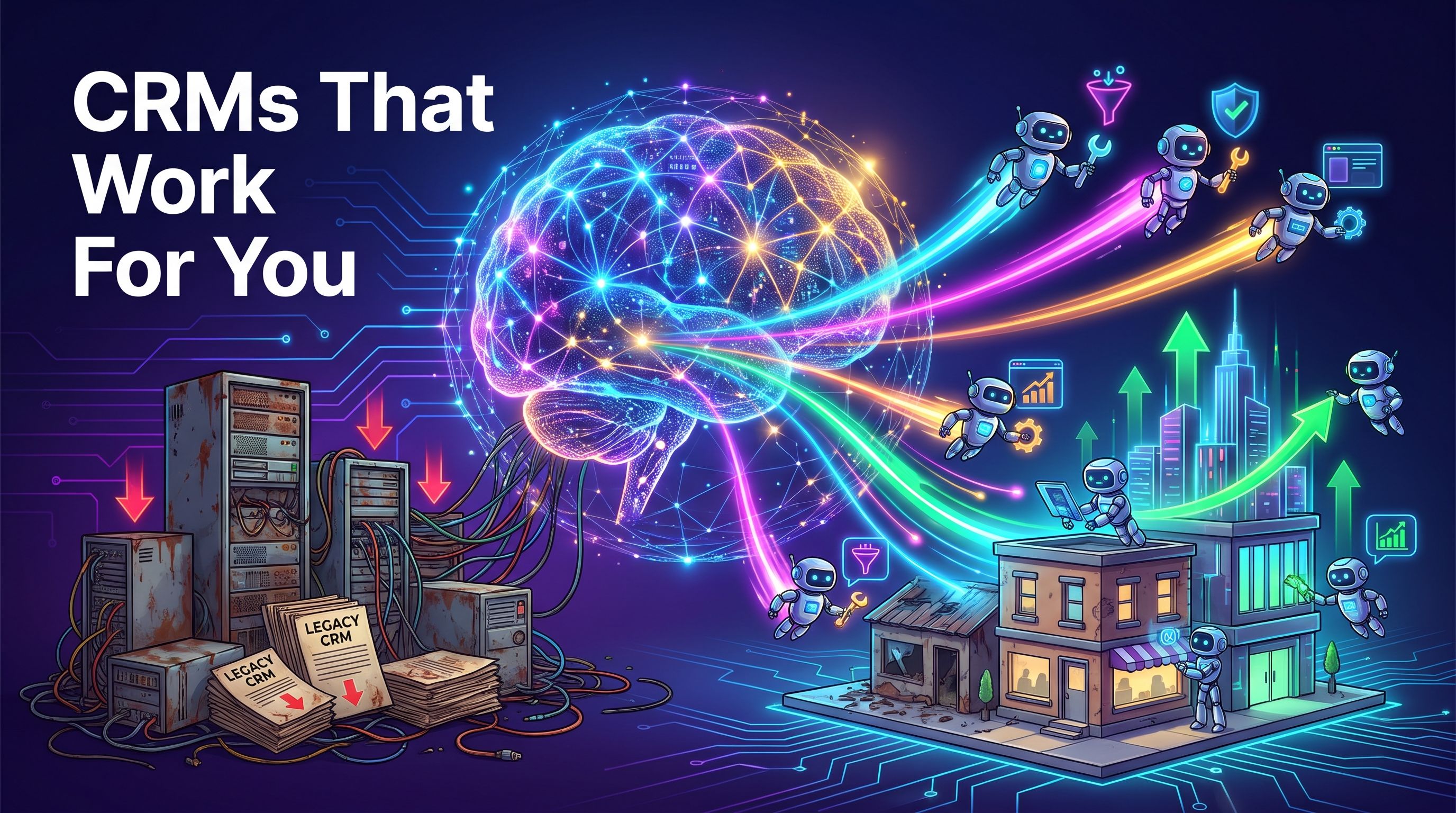
A group of Freshworks alumni has just launched a new startup called Dreamteam, aiming to challenge legacy CRM giants with a fresh approach. Instead of building another traditional database with an AI button bolted onto the side, Dreamteam is creating an AI-native CRM platform powered by four specialized agents and a central context layer called a "Company Brain." For small and medium business owners, this launch is a clear signal of where business software is heading—and why typing data into endless spreadsheet-like fields is fast becoming a thing of the past.
Why Traditional CRMs Feel Like a Second Job
If you run a small or growing company, you probably know the frustration of maintaining a classic CRM. You buy the software to help your team close more deals and stay organized, yet everyone ends up spending hours manually logging emails, updating deal stages, and copying notes from one tab to another. The tool meant to save time quietly turns into an administrative burden.
The big CRM incumbents have tried to fix this by adding generative AI features on top of their twenty-year-old architectures. However, bolted-on assistants often struggle because your business data remains scattered across disconnected silos. That is why former executives from Freshworks—people who helped build the previous generation of customer software—decided to start from scratch with ai agents for business at the very core of the system.
Inside the "Company Brain" and Specialized Agents
Dreamteam's architecture highlights two concepts that every business owner should understand, regardless of which software vendor they ultimately choose. First, instead of relying on a single generalist bot that tries to do everything poorly, the startup uses four specialized AI agents designed for distinct workflows. Just like in a real office, having focused roles—such as an ai sales agent or an operations assistant—produces much more reliable work than asking one person to wear ten hats at once.
Second, those agents all draw from what Dreamteam calls a "Company Brain"—a central context layer that holds your business rules, product details, and customer history in one place. When every digital helper shares the same up-to-date memory, a customer does not have to repeat their story three times as they move from a first inquiry to an active sale.
The biggest shift in business software isn't better dashboards—it's moving from passive databases where humans type in records to active systems where AI employees share context and do the routine legwork for you.
Legacy CRM vs. AI-Native Workspace: What Changes?
To see why startups and SMBs are paying close attention to this trend, it helps to compare how daily work looks in a traditional setup versus a modern workspace built around ai employees and shared context.
| Workflow Area | Traditional Legacy CRM | AI-Native CRM & Agent Approach | |
|---|---|---|---|
| Data Entry & Updates | Staff manually log chats, create tasks, and move cards across boards. | Agents capture details from conversations and organize tasks automatically. | |
| Lead Response | Prospects fill out a static form and wait hours or days for a human reply. | An AI front desk answers questions instantly and handles initial qualification. | |
| Company Knowledge | Scattered across PDFs, emails, and the heads of veteran team members. | Centralized in a shared knowledge base or connected via open protocols. | |
| Setup & Maintenance | Often requires expensive consultants or custom coding to connect tools. | Designed to deploy ai agents without coding using plain-language instructions. |
Notice that the goal here is never to remove the human touch from customer relationships. Rather, letting software handle repetitive sorting and first-response questions frees up your time so you and your team can focus on high-value conversations, tricky negotiations, and actual strategy.
You Don't Need an Enterprise Budget to Build Your Own "Company Brain"
Reading about venture-backed CRM challengers can make it sound like you need to rip out all your existing tools or wait years for enterprise software to trickle down to Main Street. In reality, small businesses actually have an advantage right now because they are nimble enough to adopt lighter, modular tools today.
For example, there is a growing ecosystem around open standards like mcp servers (Model Context Protocol), which let you connect Claude to your CRM or connect ChatGPT to business tools you already rely on. Instead of locking all your company intelligence inside one pricey vendor's walled garden, MCP acts like a universal adapter so your favorite AI assistant can safely read tasks, look up client context, and help manage daily operations.
If you want a practical, ready-to-go setup, platforms like botb2b.ai already bring these pieces together for small and medium teams without requiring you to hire a developer:
- An AI front desk that lives on your website chat widget and Telegram to greet visitors, answer common questions from your own documents, and qualify leads around the clock.
- A free CRM with task boards where inquiries and follow-ups stay neatly organized for your human team to review and close.
- A built-in catalog of AI models and MCP servers so your AI assistants and business tools share real context instead of working in the dark.
What This Means for Your Business
Dreamteam's launch by seasoned Freshworks veterans proves that the old way of managing customer relationships—staring at rows of manual data—is on its way out. Over the next couple of years, customers will simply expect fast, informed answers whenever they reach out on your site, and lean teams that use AI to stay organized will easily outpace competitors bogged down in admin work.
You do not have to overhaul your entire company overnight to ride this wave. Start small: audit where your team loses the most time copying information between chats and task lists, centralize your basic FAQs and pricing rules into one clean document, and test an AI front desk or a connected CRM board on a single channel like your website chat. Once you experience software that actively helps with the busywork instead of demanding more of your attention, you won't want to go back.