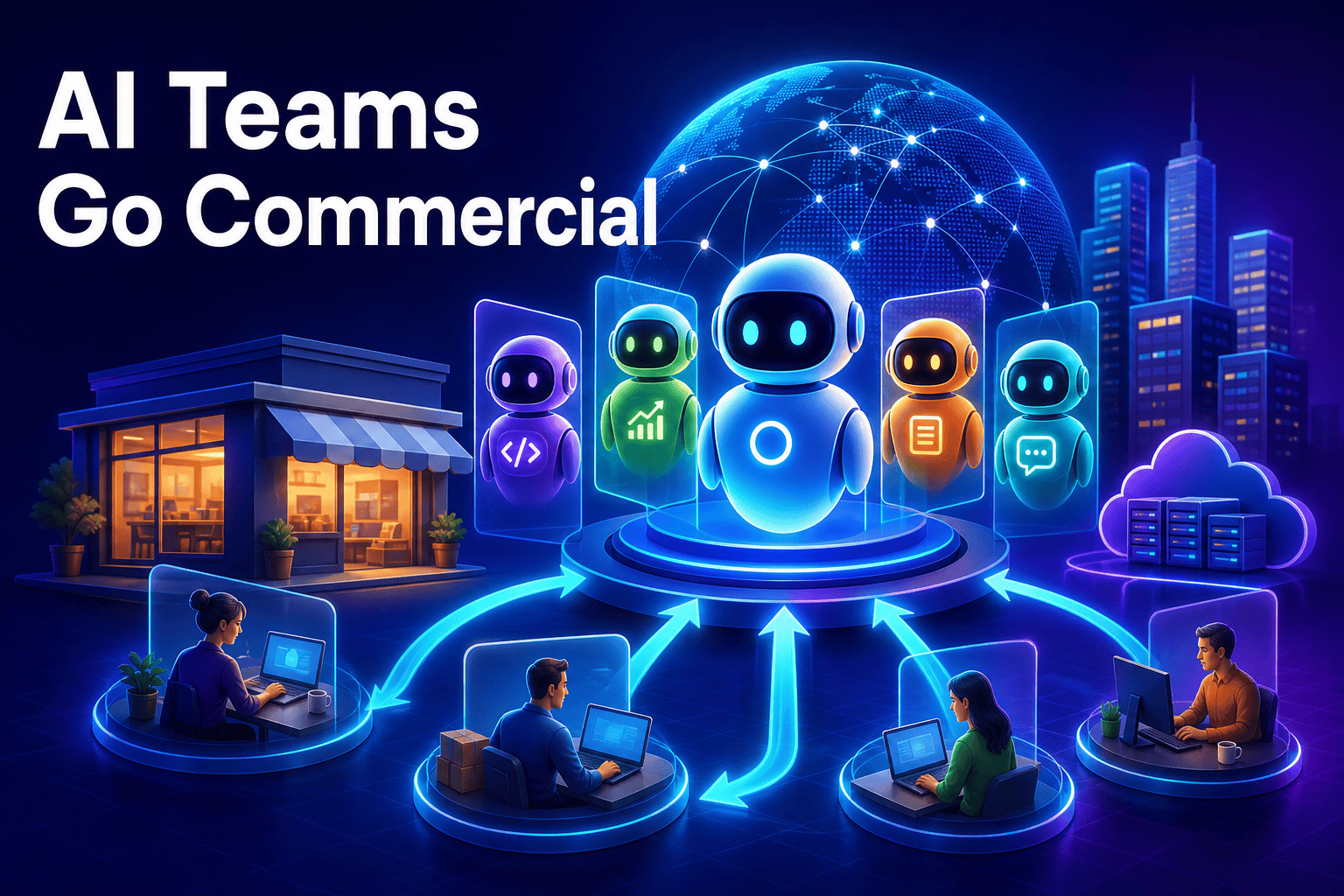
South Korea's Hancom has hired a U.S. executive to commercialize Nomadian, its AI workforce platform, in America. On the surface, that sounds like one more AI launch. In practice, it is a useful signal that small-business automation is moving from product demos to serious go-to-market execution.
For owners of lean teams, that matters. When a vendor starts hiring local leadership, building channels, planning pricing, and working with a major cloud partner, it usually means the category is getting closer to everyday business use.
What happened with Nomadian in the U.S.
Hancom said it brought in Bill Fanning as senior vice president and head of U.S. business development for Nomadian. The company also held a Seattle briefing around its U.S. rollout and spent two days discussing cooperation with AWS, including sales channels and commercialization plans.
The important part is the target audience. Hancom says it is centering its U.S. commercialization strategy on American entrepreneurs and businesses with fewer than 10 employees, using three pillars: local partners, beta expansion, and customer acquisition through advertising.
Planned partners include U.S. Small Business Development Centers, SCORE, accelerators, and university startup centers. That is a practical choice because these are the places where solo founders and very small teams already go for guidance, distribution, and early trust.
| Signal from the news | What Hancom is targeting | Why it matters to SMB owners |
|---|---|---|
| Partner network | 3 to 5 partners before beta, 10 to 15 by March | Shows focus on distribution, not only product |
| Beta acquisition | 10,000 companies a month from December to February, up to 30,000 users | Indicates a broad small-business play |
| Launch timing | Beta in December, commercial version in March | Suggests an aggressive rollout schedule |
| Market backdrop | 31.99 million U.S. businesses without employees in 2024; 36% of startups were solo ventures | Lean teams are a large and growing buyer segment |
Why this matters beyond one product launch
Many AI announcements stop at the feature list. This one comes with local leadership, partner recruitment, advertising plans, workload-based pricing, and AWS Marketplace ambitions. If Nomadian is listed there, AWS customers will be able to subscribe using their existing accounts, which removes friction at the buying stage.
That is why this story matters to anyone tracking ai agents for business. The category is shifting from interesting software to something vendors are learning how to package, distribute, and support for real buyers.
The real signal is not that another AI product exists. It is that AI workforce vendors are now building partner networks, marketplaces, and pricing models aimed at everyday small businesses.
For business owners, that changes the conversation. You are no longer only comparing model quality or prompt tricks. You are comparing onboarding, access, billing clarity, and whether the tool fits the way your team already works.
From assistant to digital workforce
Nomadian is being positioned as more than a single assistant. In Hancom's description, users build an organization in a virtual office with Ara as the AI team leader and 11 role-based team members who handle tasks such as customer service, project planning, market and competitor research, marketing content, and sales proposals.
This role-based framing fits the broader move toward ai employees and a digital workforce. Small companies usually do not need one all-knowing bot. They need a system that can own repeatable tasks, hand work off between roles, and keep deliverables in one place instead of scattering work across multiple tools.
That is the appeal of an ai workforce for a small team. It is less about replacing people and more about reducing context switching so founders can spend more time on growth, customers, and decision-making.
The practical lesson: workflow beats novelty
Another useful part of the story is Hancom's focus on predictable pricing. The company says it is designing fees to reflect AI workloads while still letting customers forecast costs, and it plans to refine pricing during beta. For SMBs exploring ai customer support or proposal drafting, that kind of visibility matters almost as much as the quality of the output.
Integration is the next filter. Real ai automation for small business gets better when the system can work with documents, tasks, and customer records instead of operating from a blank chat window. Hancom is also emphasizing one-platform workflow, with users able to review and edit reports and proposals without jumping between separate AI tools.
That is where mcp servers and the broader model context protocol conversation become practical. They give AI assistants a structured way to use business tools, which is often the difference between a clever demo and something a team can rely on every day.
If you do not need a full virtual office metaphor, there are lighter ways to start. For example, botb2b.ai offers an AI front desk for your website chat widget and Telegram, a free CRM with task boards, a catalog of AI models, and MCP servers that connect AI assistants like Claude and ChatGPT to business tools, all without hiring a developer.
What this means for your business
If you run a small company, the takeaway is not to copy Hancom's interface. The takeaway is to notice what the market is standardizing: role-based automation, partner-led distribution, simpler billing, and tools built for lean teams rather than large enterprise IT departments.
- Start with one job, not a full org chart. First-line support, proposal preparation, research summaries, and follow-up are usually better pilot workflows than company-wide automation.
- Ask how the system gets context. A tool that can work with your documents, CRM, and task flow will usually be more useful than one that only chats.
- Check the go-to-market basics. Marketplace availability, partner support, and predictable pricing can matter more than flashy demos.
- Keep a human review step at the beginning. The best early use of AI is to free up your time, not to remove oversight from customer-facing work.
In short, Hancom's U.S. push is a sign that AI workforce products are becoming easier to buy and easier to understand. As that happens, small businesses will have more chances to test practical automation without building everything from scratch.