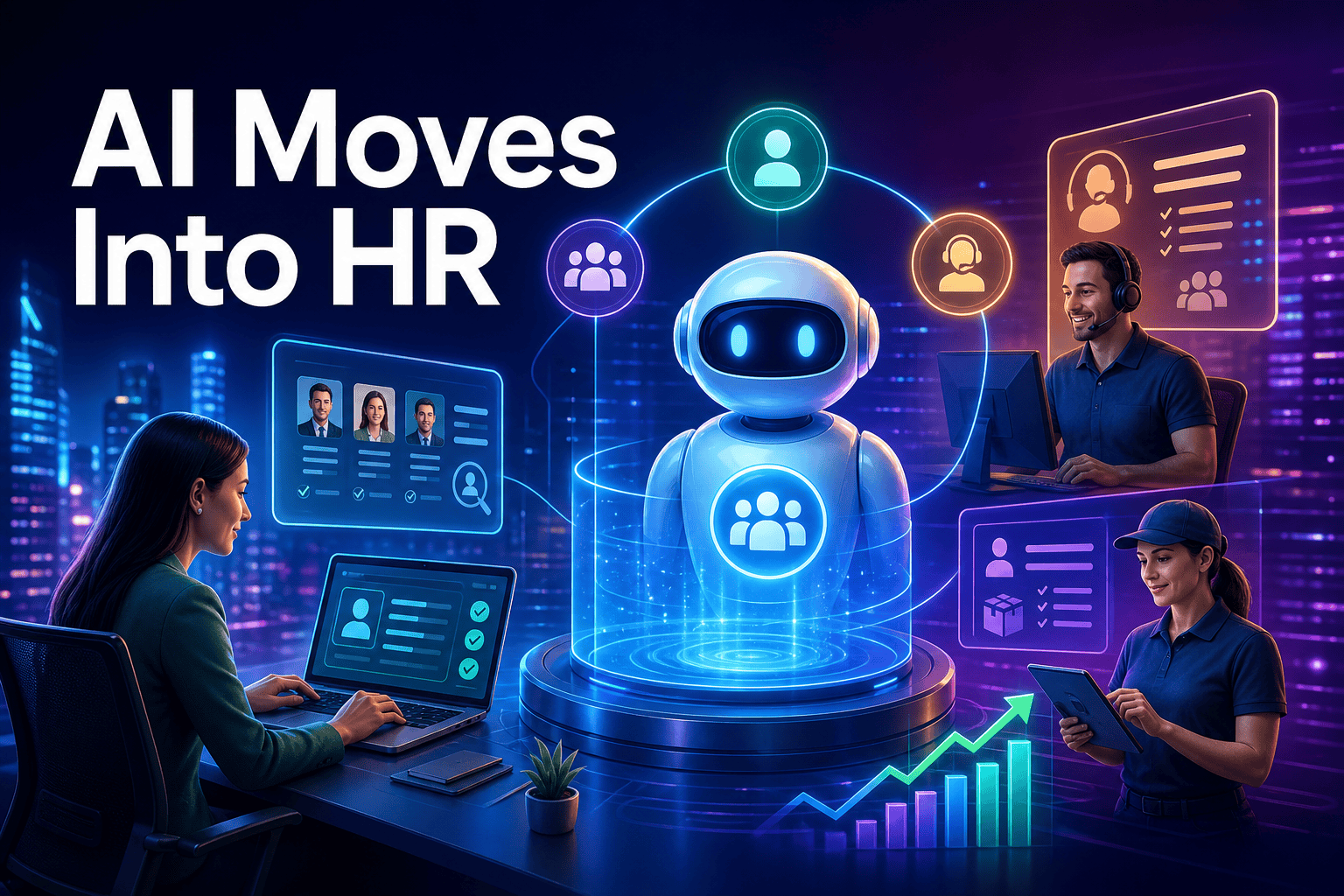
Insperity has launched HR360 AI Agent, a new product designed to automate HR workflows across employees, service teams, and customer-facing operations. For business owners, the important part is not just the HR angle. It is another sign that AI is moving from simple assistants into role-based systems that help teams handle repeatable work.
That matters because many small and mid-sized companies do not need a giant enterprise suite to benefit from this shift. They need practical ai automation for small business: tools that answer routine questions, route tasks, and keep work moving without creating more software overhead.
What Insperity actually launched
According to the announcement, HR360 AI Agent is meant to support HR management by automating workflows that touch employees, service teams, and customer-facing operations. That wording is worth paying attention to because it goes beyond a basic internal help bot. It suggests a system designed to sit across multiple teams where questions, approvals, and updates often get stuck.
For small business owners, this is useful as a market signal. Vendors are no longer talking only about chat interfaces or generic copilots. They are packaging AI around business roles and cross-functional workflows, which is usually where time gets lost in growing companies.
In plain language, the news says this: AI is being positioned less as a novelty and more as a layer that helps work move from one step to the next. HR is simply one of the clearest places to see that change.
Why AI agents for business are moving into operations
Many owners still picture AI as a smarter FAQ box or a writing assistant. Those tools have their place, but the more interesting shift is operational. The useful frame here is ai agent vs chatbot: a chatbot mainly answers, while an agent is expected to follow rules, collect context, and help push a process forward.
The real shift is from AI that only talks to AI that helps teams move tasks, policies, and decisions forward.
That is why ai agents for business are getting so much attention. Each agent can be shaped around a narrow role, such as answering policy questions, routing requests, collecting missing details, or passing a case to the right person. Put together, that starts to look less like one bot and more like a lightweight digital workforce that supports your team.
For SMBs, this matters because operations are often held together by inboxes, spreadsheets, shared documents, and people remembering what comes next. AI does not need to replace anyone to be useful here. It can simply free up your time by taking the first pass on routine work and leaving exceptions to humans.
What smaller companies should copy — not the whole enterprise stack
A practical way to read this news is to focus on workflow patterns, not on vendor size. Most smaller companies do not need a full enterprise HR layer. What they can copy is the idea of starting with one workflow where questions repeat, rules are clear, and handoffs are frequent.
If you are evaluating an ai employee for business, look for a narrow use case with clear inputs and clear escalation paths. That is usually where AI becomes helpful fastest, because everyone already knows what good handling looks like.
| Workflow area | Manual approach | AI-agent-assisted approach | Why it matters for SMBs |
|---|---|---|---|
| Employee questions | Managers or HR answer the same policy questions repeatedly | Agent gives a first response from approved materials and routes exceptions | Less interruption and a more consistent first answer |
| Onboarding information | New hires search through emails, folders, and scattered notes | Agent points people to the right checklist, document, or next step | Fewer missed steps and easier coordination |
| Service team handoffs | Requests bounce between inboxes without enough context | Agent captures details and sends a structured task to the right person | Cleaner internal follow-up |
| Customer-facing updates | Frontline staff retype routine information or ask internally for answers | Agent surfaces approved information and flags cases that need a human | Better consistency without over-automating |
The best starting point is usually simple:
- Choose a high-volume question or request type.
- Define the source documents and business rules the agent should use.
- Set a clear handoff point for cases that need judgment, approval, or empathy.
This approach keeps expectations realistic. You are not trying to automate your whole company at once. You are building one reliable layer at a time.
Why connected systems matter: MCP servers and practical setup
The hard part is rarely the conversation itself. The hard part is what happens behind the conversation: where the agent gets trusted information, where it sends a task, and how your team reviews the outcome. That is why MCP servers are becoming more relevant for growing companies.
The Model Context Protocol is useful because it gives AI assistants a structured way to work with business tools. In plain terms, it helps connect assistants like Claude and ChatGPT to documents, task boards, and other systems so the response is tied to real business context rather than guesswork.
This is where an ai agent platform can be more practical than collecting separate tools. For example, botb2b.ai offers AI employees such as an AI front desk for your website chat widget and Telegram, a free CRM with task boards, a catalog of AI models, and MCP servers that connect AI assistants to business tools without hiring a developer. For many SMBs, that kind of setup is easier to test than building a workflow from scratch.
What this means for your business
Insperity launching HR360 is not just an HR story. It is a reminder that AI is becoming more role-based, process-aware, and connected to everyday operations. If you run a smaller business, the takeaway is not that you need an enterprise HR product tomorrow. It is that the next useful wave of AI will be tied to real workflows, not just clever conversations.
A good next step is to review where your team loses time to repeated questions, manual routing, and document hunting. Those are often better entry points than broad transformation projects. A well-scoped AI employee for business can give your team a steadier first layer of support while humans keep control of exceptions and final decisions.
- Pick one repeatable process with clear rules.
- Make sure the agent can use approved documents and escalation logic.
- Choose tools that connect chat, tasks, and business systems in one practical flow.
The companies that benefit first will not be the ones chasing the biggest demo. They will be the ones treating AI as part of operations and starting with a process that already needs structure.