The news in plain English
Tata Communications and TTBS have launched a subscription-based AI agent platform for small and midsize businesses in India. According to the announcement, these agents connect to a company’s own data and help with lead conversion, bookings, and customer support, without the business needing to run servers or manage AI models.
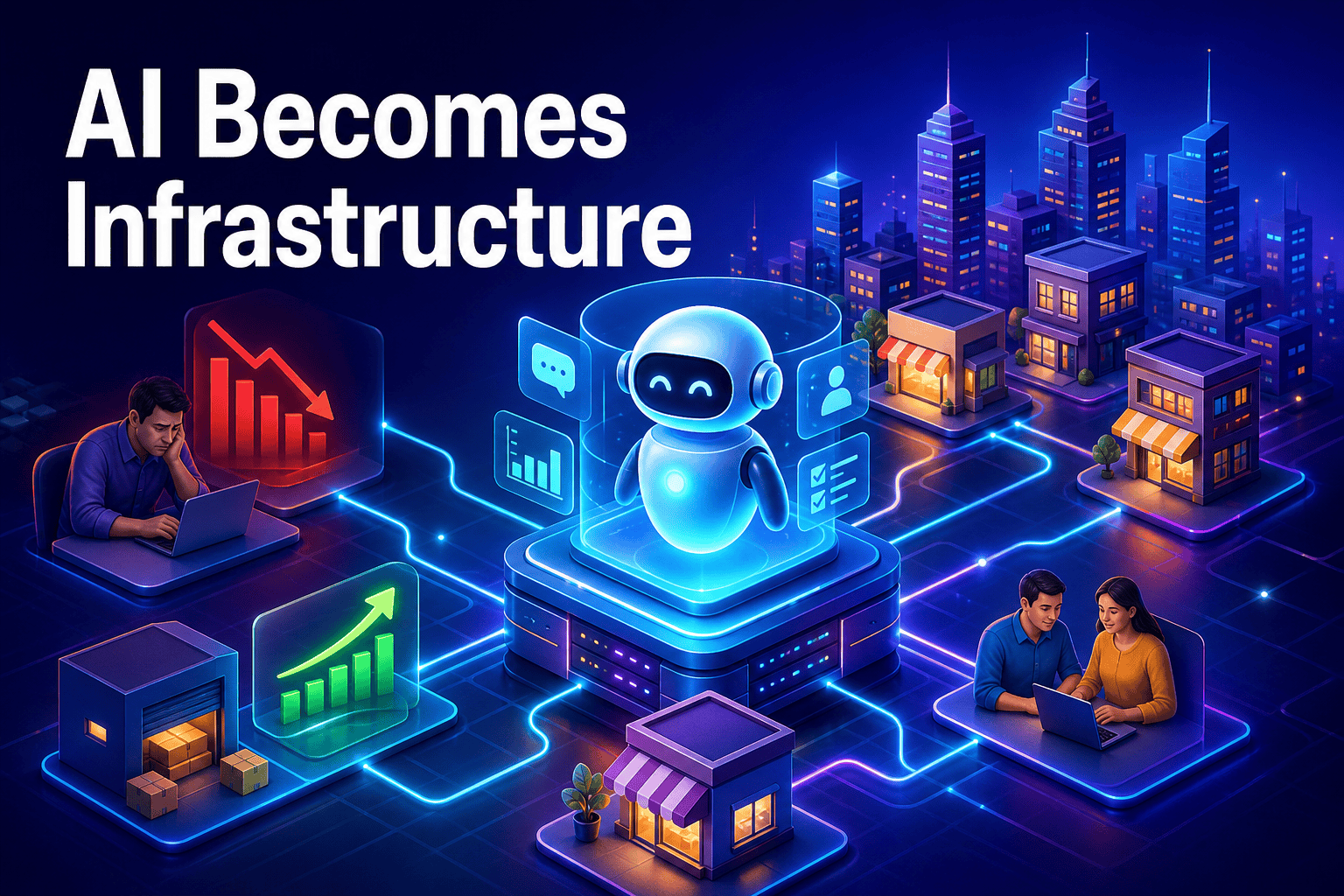
That matters far beyond India. When a large telecom group starts packaging ai agents for business as a subscription, it is a sign that AI is moving out of the experimental phase and into everyday operations. Tata is starting with Indian SMBs and says it plans to take the platform global, which makes this a useful signal for owners in any market.
Why the subscription model matters
For years, AI was often presented to smaller businesses as something complex: long setup cycles, technical teams, expensive integrations, and unclear ownership once the system was live. This launch points in the opposite direction. The offer is simple: subscribe, connect your business data, and start using the service.
That shift is important because most owners do not need a giant transformation program. They need an ai agent for small business that can handle routine interactions, keep incoming demand from going cold, and support the team without adding another full software project. In other words, the product is not just AI itself. The product is the packaging.
| Signal from the launch | What was reported | Why SMBs should care |
|---|---|---|
| Delivery model | Subscription service connected to company data | An ai agent platform is becoming easier to buy and manage |
| Early pilot result | 30% better lead conversion | Consistent follow-up can matter as much as lead volume |
| Early pilot result | 20% more bookings after reducing unanswered enquiries | Small response gaps can quietly become missed revenue |
What the pilot numbers really say
The headline percentages are attention-grabbing, but the deeper lesson is operational. These businesses did not need a new product, a new market, or a bigger ad budget to see movement. What changed was the business becoming more available when potential customers showed interest.
This is why response coverage matters so much. Many SMBs assume they lose business because a competitor is better. In reality, they often lose business because no one responds quickly enough. That is exactly where ai customer support becomes useful: not as a magic fix, but as a way to keep the first interaction moving.
The biggest takeaway is simple: for SMBs, faster and more consistent response is becoming basic business infrastructure, not a nice-to-have.
The news also highlights something owners often overlook. A lot of growth problems are not really marketing problems. They are handoff problems: an enquiry arrives, nobody is available, the lead cools down, and the opportunity disappears before a human ever gets involved.
From generic bots to connected assistants
Many small businesses already tried a simple chat box a few years ago and came away unimpressed. That experience makes sense if the system could only deliver generic answers. A disconnected tool cannot do much beyond basic scripts.
The useful version is different. You train chatbot on your own data, give it access to the policies, pricing logic, service details, and internal context it needs, and then let it handle repeat questions while people focus on exceptions. That is why the market is moving away from generic widgets and toward connected assistants that can actually work with business context.
This is also where mcp servers start to matter. As more businesses want AI to work with live information, not static prompts, the ability to connect assistants to business tools becomes part of the conversation. The real value is not that the assistant can speak fluently. The value is that it can act on relevant context instead of guessing.
Some vendors package this trend under labels like AI employees. The more practical test is simpler: can the system understand your business well enough to handle routine work safely, consistently, and with clear escalation rules?
How to evaluate this trend without overcomplicating it
If this launch caught your attention, do not start by comparing models or reading benchmark charts. Start by identifying the part of your operation where customer momentum slows down. That might be website enquiries, quote requests, support questions, appointment requests, or the repeated back-and-forth that fills your team’s day.
- List the repeat questions your team answers every week.
- Gather the source material the assistant would need: FAQs, policies, pricing notes, onboarding steps, and product documents.
- Define the boundary between what AI can handle and what should be escalated to a person.
- Choose one channel first instead of trying to automate everything at once.
- Measure coverage: when enquiries come in, how often is nobody actively available to respond?
For teams that want this kind of setup without hiring a developer, botb2b.ai fits naturally into the same broader shift. It is an international platform with an AI front desk for your website chat widget and Telegram, a free CRM with task boards, a catalog of AI models, and MCP servers that connect AI assistants like Claude and ChatGPT to business tools.
The common idea is straightforward: ai automation for small business is becoming more modular, more accessible, and easier to adopt in parts. Owners do not need to automate the whole company in one move. They need to remove one bottleneck at a time.
What this means for your business
Tata’s launch matters because it shows where the market is heading. Smaller companies are no longer being asked to buy AI as an abstract innovation project. They are being offered practical systems that help them respond faster, stay organized, and keep routine work from piling up.
For your business, the right question is not whether AI is trending. The right question is where interest, enquiries, or support work currently stall. If you can spot those gaps, then the right ai tools for smb can help your team stay available, more consistent, and less buried in repetitive work.
That is the real lesson behind this news: the next wave of AI adoption for SMBs will be won less by hype and more by useful, connected systems that solve ordinary business problems well.