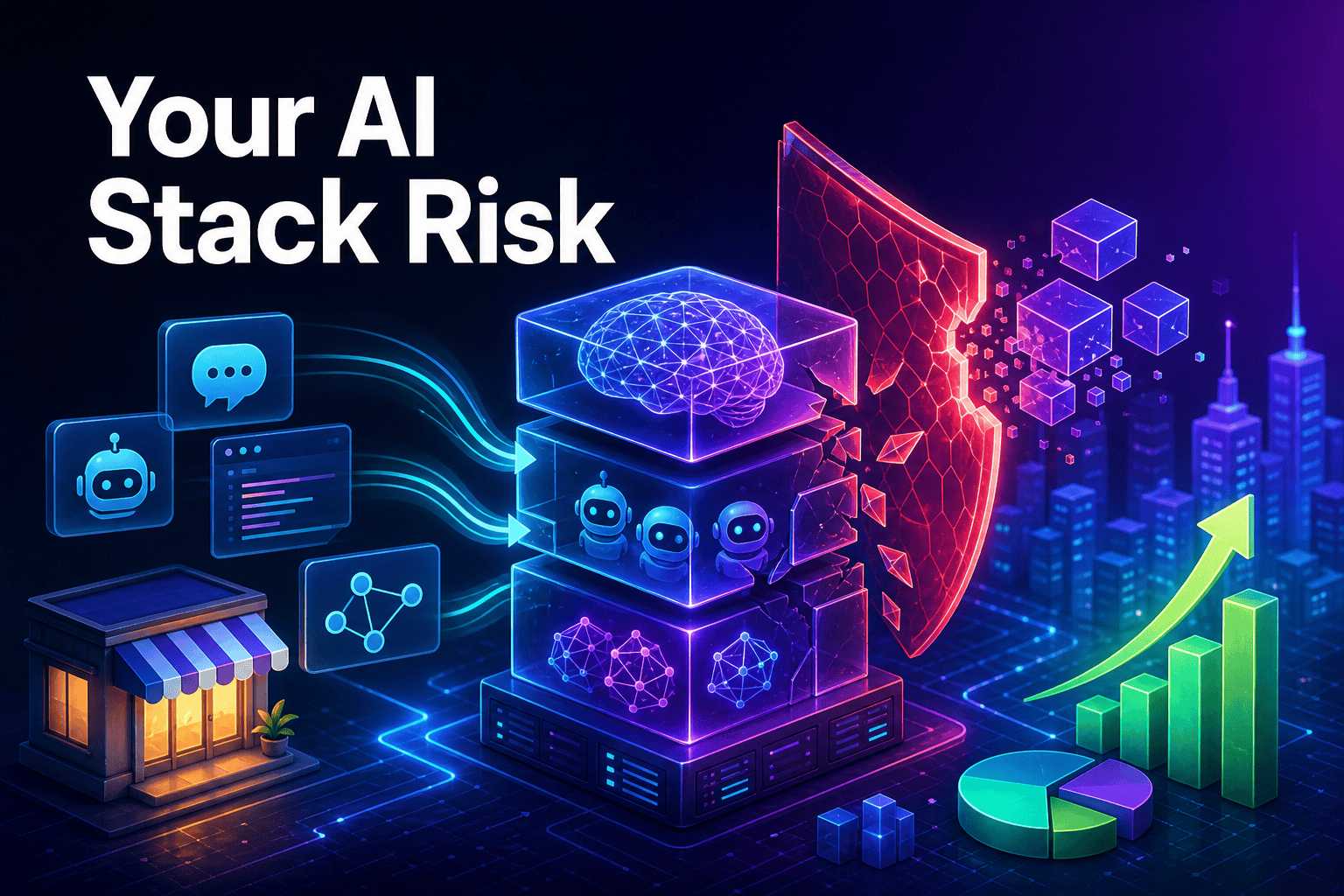
China has proposed export controls on 23 AI technologies, including trained model weights, agent orchestration tools, and inference-related capabilities. For most small businesses, that sounds far removed from daily operations. But if you already use ai agents for business, vendor choices, cross-border integrations, and future access to advanced models can all be shaped by rules like this.
The immediate takeaway is not panic. It is to understand where your automation depends on a specific model, country, or orchestration layer, especially if you rely on AI for customer-facing work such as ai customer support or sales follow-up.
What China actually proposed
Beijing released a draft export control list covering 23 AI technologies. Among the items named are trained model weights, agent orchestration tools, and capabilities related to inference. Reporting around the draft also noted that some open-source materials may be exempt.
That is important because the proposal does not stop at hardware. It reaches into the software and operational layers that turn a model into a working product, which is exactly where many business automation systems live today.
Why model weights and orchestration matter to small companies
Most owners do not buy model weights directly, and many have never had to think about orchestration. But model weights are the learned core of a trained model, while orchestration tools coordinate how an AI system calls tools, follows steps, and hands work from one component to another. In plain language, these are the pieces that make modern ai agents for business usable in the real world.
If rules tighten around those layers, the impact may not be immediate. It can arrive through vendors changing products, integrations, deployment regions, or access terms for features built on inference-related capabilities.
| AI layer | What it does | Why a business should care |
|---|---|---|
| Trained model weights | The learned capability inside a model | Can affect access to a model family or how a vendor deploys it |
| Agent orchestration tools | Coordinate prompts, tools, memory, and task flow | Can affect reliability of workflows like lead routing, support triage, and follow-ups |
| Inference-related capabilities | Help run models in production | Can affect availability, latency, and which regions or partners a vendor can serve |
| Open-source exemptions | Leave some materials outside the controls | Could preserve alternative paths for testing, learning, and lighter deployments |
For small businesses, the real risk is not geopolitics itself. It is building customer-facing automation on AI layers you cannot easily swap when the rules change.
Where small businesses may feel this first
You may never export AI technology yourself. Still, if one of your software vendors depends on controlled components, the effect can show up as product delays, regional limits, slower procurement, or sudden changes in which model is available inside your dashboard.
This is why the story matters even if you are simply comparing ai tools for smb. A good ai agent platform is not just about features today. It is also about how easily you can switch providers, preserve workflows, and keep serving customers if the supplier landscape changes.
Signs your setup may be too dependent on one layer
- Your automation only works with one model provider.
- Your vendor does not explain what orchestration layer sits underneath the product.
- You cannot export prompts, knowledge, or workflow logic in a reusable format.
- Your support or sales process breaks if one API, region, or partner changes terms.
For teams using AI employees for repetitive front-line tasks, this matters even more. The closer AI gets to customer conversations, lead qualification, or internal routing, the more costly it becomes to rebuild everything from scratch under time pressure.
How to reduce lock-in before rules tighten
The safest response is architectural, not political. Keep your knowledge base, prompts, and workflows portable. Separate the customer channel from the model layer whenever possible, and document which parts of your process depend on a single vendor.
This is where mcp servers and the broader model context protocol conversation become practical, not theoretical. Standardized connections make it easier to connect ChatGPT to business tools or Claude without rebuilding your whole process every time your model stack changes.
One example is botb2b.ai, an international platform with AI employees: an AI front desk for your website chat widget and Telegram, a free CRM with task boards, a catalog of AI models, and MCP servers that connect AI assistants to business tools, all without hiring a developer. For a small team, that kind of setup can make experimentation safer because your workflows are less tied to one single model vendor.
Questions to ask your vendor this quarter
- Can we switch between models without rebuilding the workflow?
- Can we export our knowledge base, prompts, and process logic?
- What regions, partners, or third-party dependencies are critical to this product?
- Do you support standard integrations for CRM, documents, and task systems?
What this means for your business
For most SMBs, this news is a reminder that AI strategy is now partly infrastructure strategy. If you use an ai chat widget for website, a Telegram assistant, or back-office automation, your goal is not to predict geopolitics. It is to build ai agents without coding in a way that stays flexible when the market shifts.
- Map every model, tool, and integration in your current AI workflow.
- Ask vendors about model choice, regional restrictions, and portability.
- Keep documents, FAQs, and SOPs in reusable formats rather than locked inside one app.
- Prefer setups with multiple model options and standard connectors such as MCP.
- Keep human review in sensitive sales and support steps so changes in the stack do not create customer-facing mistakes.
China's draft controls may or may not affect your business directly this quarter. But they already show the direction of travel: AI is becoming more strategic, more regional, and more layered. Small businesses that build with portability in mind will be in a better position to adapt without freezing progress.