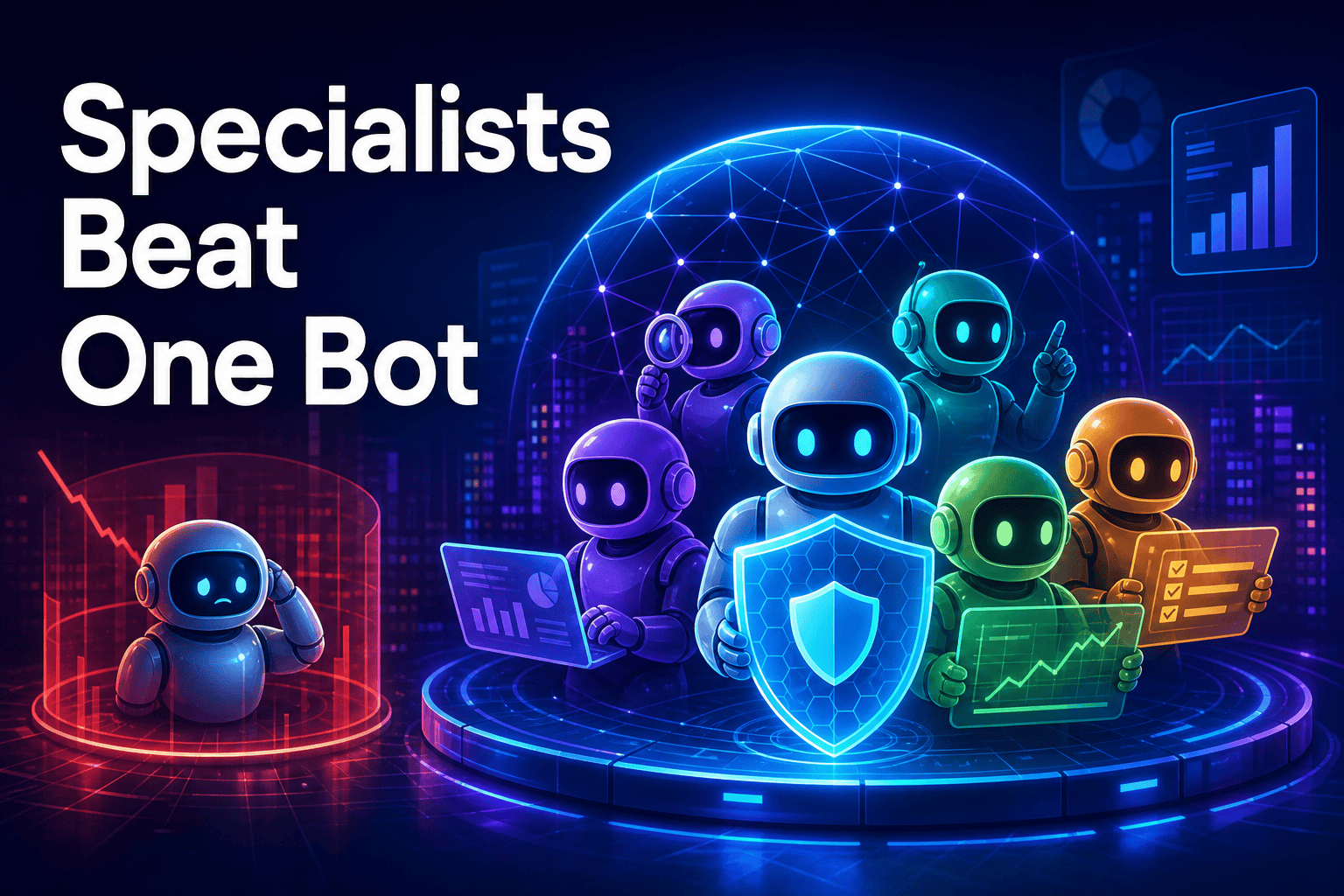
Elastic has introduced AlertZero, a new offering made up of specialized AI agents for security operations. According to the announcement, it automates triage, hunting and investigation across the SOC lifecycle, reflecting growing demand for agent-based security workflows.
If you run a small or midsize business, you may not have a formal security operations center. But this launch still matters because it shows where AI agents for business are heading: away from one all-purpose assistant and toward several focused agents that each handle a clear step in a process.
What Elastic actually launched
AlertZero is not being presented as a single chatbot. It is a team of AI agents designed to work across the security operations lifecycle, including triage, hunting and investigation.
In plain language, that means the system is meant to help security teams sort incoming alerts, look for meaningful patterns and pull together context for follow-up investigation. Instead of making analysts start from zero each time, the product aims to support the workflow from one stage to the next.
- Triage helps decide what needs attention first.
- Hunting looks for patterns or threats that are not obvious at first glance.
- Investigation brings together context so a human can decide what to do next.
The important business signal is the product design. Elastic is leaning into the idea that different tasks are better handled by different agents, rather than asking one model to do everything from start to finish.
Why this matters beyond cybersecurity
Most owners will never buy a SOC tool like this. Still, the launch matters because it shows how an ai agent platform is increasingly being built: not as a single clever chat window, but as coordinated agents with narrow roles, permissions and handoffs.
That shift matters because it turns AI from something that only answers questions into something closer to process software. For small teams, that is where ai automation for small business starts to feel practical.
| Approach | How it works | What it means for an SMB |
|---|---|---|
| Single general assistant | One bot answers questions and tries to handle every request | Easy to test, but often weak on follow-through and process control |
| Team of specialized agents | Separate agents handle intake, analysis, updates and escalation | Better fit for repeatable workflows with clear stages |
| Tool-connected agents | Agents can read data, update systems and pass context across tools | More useful when work has to move, not just be discussed |
That is the real lesson from AlertZero. The market is moving from ask AI a question to give AI a role, a toolset and boundaries.
The headline is not that every company needs AI for security tomorrow. The headline is that software is being rebuilt around several focused agents working together, and that same pattern is spreading into sales, support and operations.
AI agent vs chatbot: the workflow difference
When people compare ai agent vs chatbot, the simplest difference is this: a chatbot mainly talks, while an agent can take action inside a workflow. That action might be checking a knowledge base, creating a task, updating a record or handing a case to the right person.
For a small team, that distinction matters more than the label. If your business only needs simple answers on a website, a chatbot may be enough. If you need the system to route requests, qualify leads or organize follow-up, you are closer to the world of ai agents without coding.
- An AI front desk can greet website visitors or Telegram contacts and answer routine questions from approved materials.
- An AI sales agent can collect intent, budget or timing signals and pass structured notes into a CRM.
- An operations assistant can turn repeated requests into tasks, summaries and next steps for the team.
That is why launches like AlertZero matter even if security is not your field. They normalize the idea of several narrow assistants working together instead of one oversized bot.
What to look for in an AI system now
If the market is moving toward coordinated agents, owners need a simple buying checklist. The best systems are not the ones with the biggest demo claims, but the ones with clear scope, safe access and useful handoffs.
- Defined roles: Each agent should have a specific job, not a vague promise to do everything.
- Grounded answers: The system should work from your documents, policies or approved data sources.
- Tool access with limits: Agents should only touch the systems they actually need.
- Human visibility: You should be able to review what the agent did and step in when needed.
- Easy connections: The platform should connect assistants to business tools without a custom project.
This is where mcp servers are becoming important. Using the Model Context Protocol, businesses can connect assistants like Claude and ChatGPT to internal tools in a more structured way, which makes it easier to give an agent the right context without a custom development project.
For example, botb2b.ai is an international platform with AI employees, an AI front desk for your website chat widget and Telegram, a free CRM with task boards, a catalog of AI models, and MCP servers that help connect assistants to business tools without hiring a developer. The point is not to copy a security operations center. It is to give each assistant a narrow role and the right business context.
What this means for your business
Elastic’s AlertZero is a security story on the surface, but underneath it is a workflow story. The takeaway for business owners is simple: the next wave of AI will look less like one smart chat box and more like a set of focused helpers that each own part of the process.
If you are planning your next AI step, start small and stay concrete. Pick one routine flow, such as inbound inquiries, lead qualification, internal task routing or first-line support, and break it into stages. Then decide where an agent can help while keeping human oversight in place.
- Map the workflow before you buy the tool.
- Choose one role for the first agent.
- Make sure it can use approved data and the right business tools.
- Keep a human in the loop for exceptions and edge cases.
The broader signal from AlertZero is clear. Specialized agents are becoming a normal design pattern in business software, and that gives smaller companies a practical way to use AI without forcing one system to do every job at once.